SquadOS vs Make: real AI agents vs visual workflow automation
Make is a visual automation engine with pluggable AI modules. SquadOS is an AI agent platform with native governance. Compare before you choose.
On this page
Make (formerly Integromat) shows up in almost every “best automation tool” search. It’s fast to set up, has thousands of ready-made integrations, and a visual editor anyone can learn in an afternoon. The question changes when automation needs to involve real AI: handling customer conversations, building an agent that learns, keeping governance over what AI says on the company’s behalf. That’s when the question shifts from “which automation tool” to “systems automation or AI agent platform.”
What each one actually is
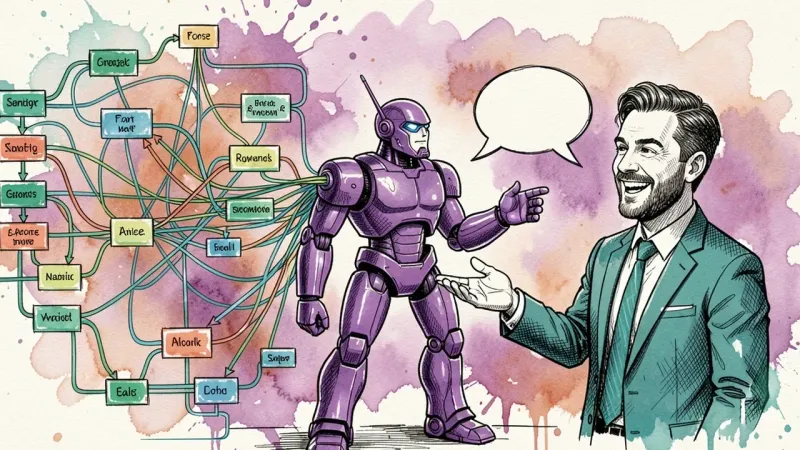
Make is a visual workflow automation engine. You build “scenarios” by connecting modules: a trigger (a new lead in a spreadsheet, a form submission), transformation steps, and actions in other systems. It has an AI module that lets you call a language model as one more step inside the scenario. It’s the right tool for moving data between systems and automating operational processes.
SquadOS is an AI platform for business. It’s not a generic automation engine, it’s the ready-made environment where employees chat with models, internal agents automate processes, and external agents handle customers on WhatsApp, Telegram, and the website, with native governance from day one.
The core difference: in Make, AI is a module inside a flow you design. In SquadOS, AI is the entire product, and the conversation flow already comes built.

Building an agent: AI module vs conversation
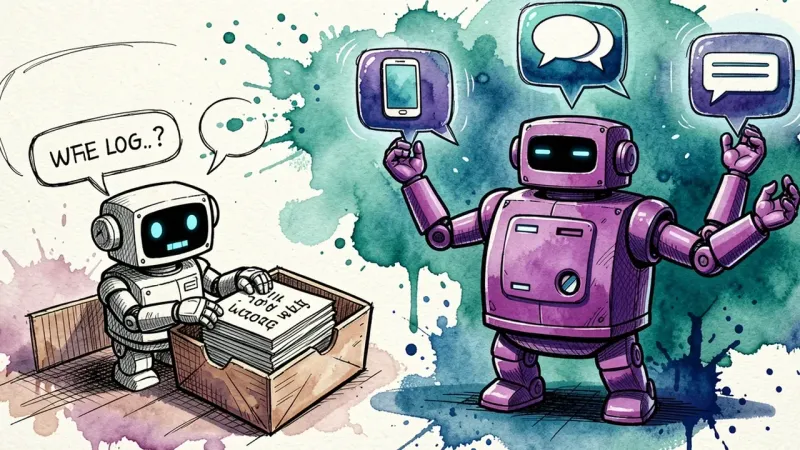
Getting AI to work in Make means building the scenario from scratch: pick the trigger, add the AI module, write the prompt in the right field, connect the model’s API key, test the run, fix whatever breaks. Each new use case is a new scenario, built piece by piece, and it’s usually someone who understands automation (not someone who understands the business process) who ends up maintaining it.
In SquadOS, AgentMaker builds the agent through conversation. You describe what you need, and it suggests the prompt, picks the right tools, connects the knowledge base and the channel. The support team builds the support agent, not an automation specialist.
- Make needs someone who understands scenarios and modules to build and maintain every AI automation.
- SquadOS lets the business team build, edit, and adjust the agent on their own, without a technical queue.

Governance and official channels
Automation that speaks for the company or touches customer data needs control. This is where the gap between the two tools shows up most clearly.
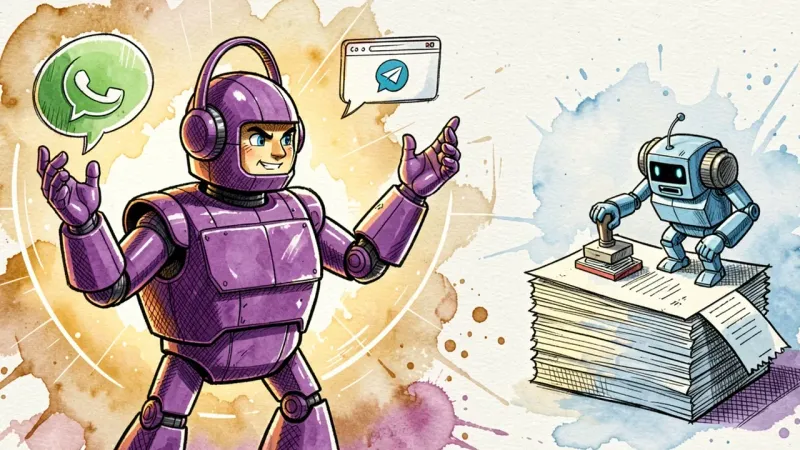
Make wasn’t built as an AI governance platform: it’s a general automation engine, used just as often to send a birthday email as to run a support agent. Conversation auditing, hallucination guardrails, personal data protection, and an official WhatsApp channel don’t come built in. Every piece of security is whoever built the scenario’s responsibility, and a channel like the WhatsApp Business API usually requires its own integration or a separately configured partner module.
SquadOS ships with all of that already on. Native guardrails against hallucination and sensitive data leaks, full audit trails for every conversation the agent has had, official WhatsApp, Telegram, and website channels connected with no manual integration. The knowledge base takes a PDF, a link, or plain text and indexes it automatically with embeddings, ready for the agent to query.
Cost: per operation vs per AI usage
The two pricing models start from different logic, and it matters depending on your size and how you’re actually using AI.
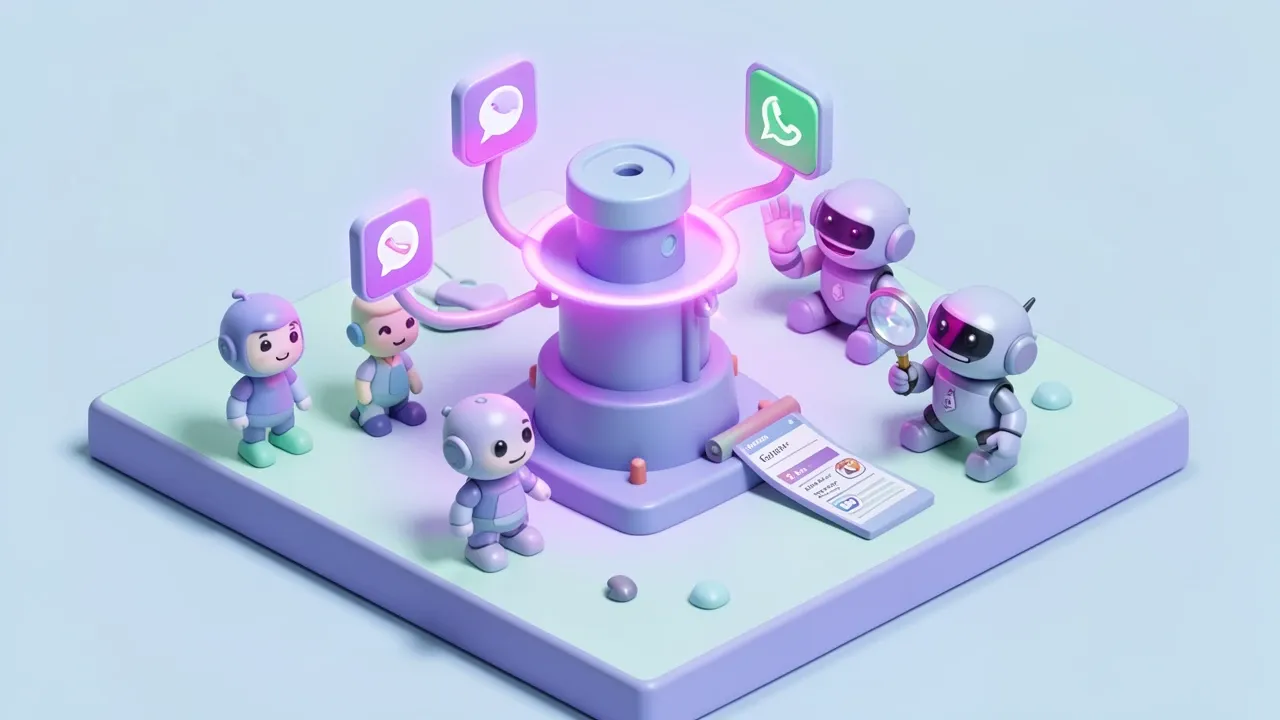
Make charges per operation: every step executed inside a scenario draws from the plan you’ve bought. A flow with many chained modules, running frequently, burns through operations fast, regardless of how much of that is actually AI.
SquadOS charges per AI usage, in credits, not per seat or per automation step. The team grows, more people use the platform, and cost tracks real AI usage, not headcount or the complexity of the flow you designed. Every plan includes full platform access, and you can bring your own API key (BYOK) when it makes sense.
In practice: if what you need to automate is mostly moving data between systems, with AI showing up occasionally, Make’s per-operation model can come out cheaper. If the core of the operation is conversation (support, sales, internal helpdesk running all day), paying directly for AI usage tends to scale better than paying for every step of a hand-built flow.
There’s a detail that’s easy to miss when budgeting: an AI scenario in Make usually chains several modules to do what a single agent does on its own (fetch context, format the question, call the model, process the response, log the result). Each of those steps counts as a separate operation. That means the real cost of “handling one full conversation” in Make tends to be higher than it looks when you only check the plan price, because a single back-and-forth already burns through several operations before it produces an answer.
How to decide between the two
The right choice depends on who’s going to operate it and what you’re automating, not which tool is “better” in the abstract.
Make makes sense when the process is essentially moving data between systems (spreadsheet, CRM, form, email), the team already has someone who builds and maintains scenarios, and AI shows up as one step inside a bigger flow that no one from the business side is going to edit on their own.
SquadOS makes sense when the goal is putting AI to work talking to customers or automating an internal process securely, without a technical queue for every adjustment, and when auditing, guardrails, and an official channel aren’t optional. Companies that already use Make to orchestrate systems keep using Make for that, and start using SquadOS specifically as the conversation and support layer. One tool doesn’t replace the other by nature.

If the question is “I want my company chatting and handling support with AI securely, without designing scenarios or maintaining modules,” the answer leans toward SquadOS. SquadOS gives you an internal hub, internal and external agents in one platform, with native governance, chat-based creation, and 100+ integrations, without having to become an automation specialist to put AI to work.