SquadOS vs Botpress: Which One to Pick for AI Support Automation
Botpress is a flow builder for developers. SquadOS is a no-code AI agent platform billed by usage. See the real difference before you choose one.
On this page
Botpress comes up fast once you search “build a chatbot with AI”: it started open-source, grew into a full conversational agent development platform, and has a large community of developers and agencies building bots on top of it. It is a powerful builder, and builder is the right word: you design the agent’s behavior in a visual flow editor, node by node.
SquadOS solves a similar problem (an AI agent talking to customers) through a different path: you describe what you want in a chat, and the platform assembles the agent for you, with no one drawing conversation logic. This article compares the two directly, so you pick based on the size of the technical team you actually have, not the more familiar name.
What each platform really is
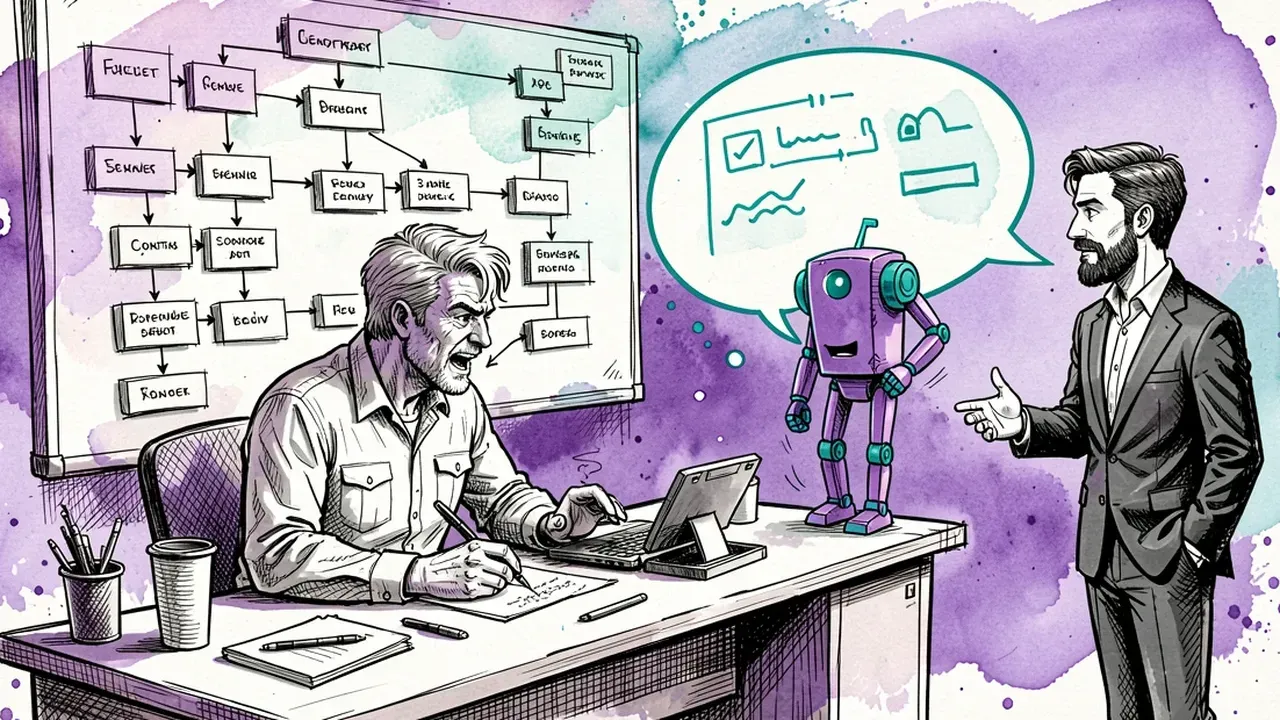
Botpress is a conversational agent building platform with open-source roots. The core is a visual flow editor: you draw decision nodes, wire up triggers, and define when to call an AI model versus when to follow a fixed rule. You can self-host the open-source version or use the cloud service. It is flexible enough to do almost anything, but “designing the flow” is technical work that sits on a product team or a hired developer.
SquadOS was built as an AI platform for business, not a conversation-automation tool. Agent creation happens in AgentMaker: you describe what the agent needs to do, and the platform assembles the prompt, picks a model, suggests tools, and connects the knowledge base on its own. There is no flowchart to draw. The external agent comes ready to handle WhatsApp, Telegram, and website support, and the same environment also runs internal agents and a hub where the team chats with AI day to day.
The core difference: Botpress hands you the building blocks and expects someone technical to assemble them. SquadOS delivers the assembled agent from a conversation.
Visual flows vs an agent built by conversation

In Botpress, every behavior change goes through the flow editor. Want the bot to ask for a tax ID before escalating? That is a new node. Want to change the wording of a conditional reply? That is another node to edit inside the tree. This gives fine control, but it also means keeping the bot working well depends on someone being able to read that flow, even long after the initial version shipped.
In SquadOS, adjusting the agent means talking to it again in AgentMaker: “before escalating, ask for the tax ID now” becomes a direct instruction, no editor required. Whoever maintains the agent day to day is usually the same person who already understands the support process, not a developer who first has to understand a flowchart someone else drew months earlier.
That changes which kind of team each platform is built for:
- Botpress pays off for a team with a dedicated developer (in-house or agency) who already treats conversation logic as an ongoing software project.
- SquadOS pays off for a business team that wants to create and adjust the agent on its own, without depending on someone programming its behavior.
Plenty of companies that try the technical route first learn this the hard way: the bot looks great at launch and stalls at the first process change, because the developer who built the original flow has already moved to another project.
Knowledge base, channels, and governance
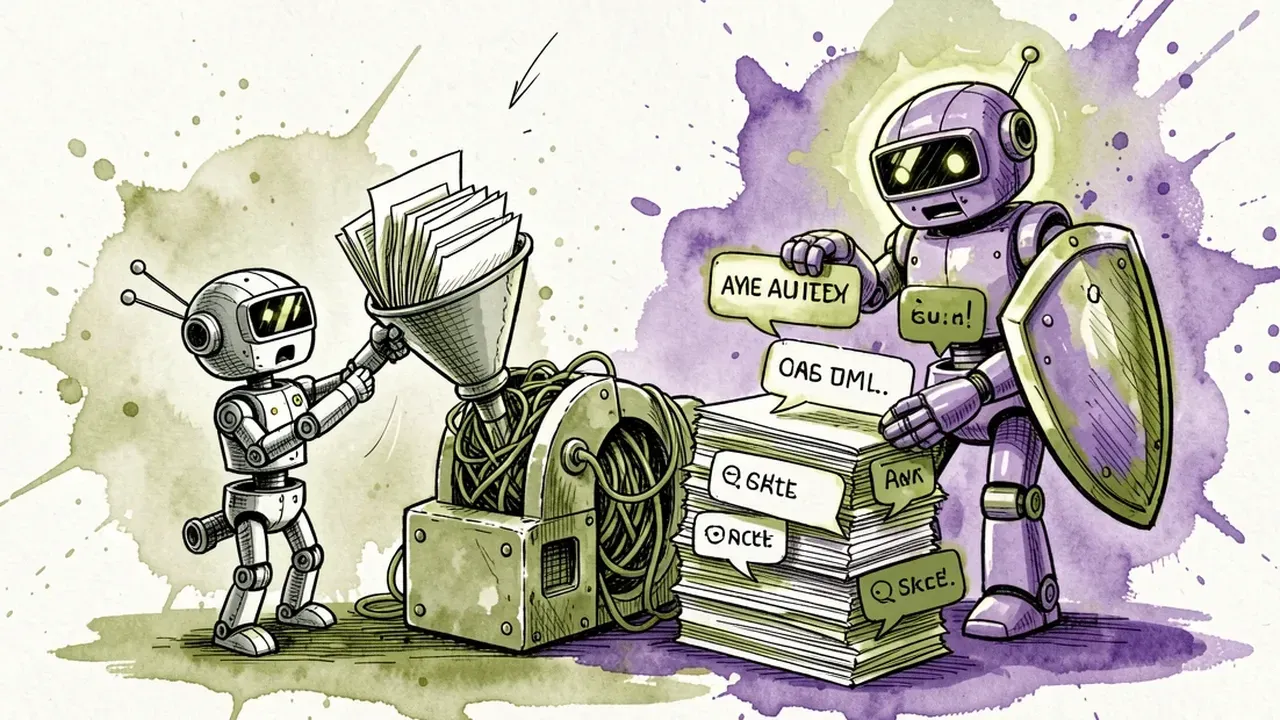
Botpress also has a knowledge base (upload files and websites for the agent to reference) and an integration hub for connecting channels like WhatsApp, webchat, and Slack. On the surface, the two platforms do similar things here. The difference shows up in who handles the gap: when a Botpress agent gets something wrong or does not know an answer, someone on the technical team has to notice and go back into the flow to fix it.
In SquadOS, AutoLearn automatically detects every question the agent failed to answer well during real conversations, groups them by similarity, and gets them ready to add to the knowledge base with one click. No one has to hunt for gaps manually. Governance ships native too: guardrails against hallucination and personal data leaks, and a full audit trail on every conversation, with nothing extra to set up.
On price, both charge for AI usage rather than a flat seat. The real cost difference is not in the credit meter. It is in how much technical team time each platform keeps consuming after the agent is live.
How to decide between the two

The right choice depends on who is going to maintain the agent after launch, not on which platform looks more capable in a demo.
Botpress makes sense when you already have, or plan to hire, a dedicated technical team to maintain conversation logic as an ongoing project, and you want the fine-grained control a flow editor gives you.
SquadOS makes sense when the goal is getting an AI agent live fast, maintained by whoever understands the business (not whoever understands flowcharts), with a knowledge base that fixes itself and governance that ships ready.
If the question is “I want to create and adjust an agent by talking to it, without depending on a developer for every process change, at a price that tracks real usage,” the answer leans toward SquadOS. On SquadOS you build the agent in AgentMaker, connect it to the official channels, and let AutoLearn maintain the knowledge base on its own, all inside the same platform that also runs your internal hub and your internal agents.